
How Founders Are Using OpenClaw to Run Marketing 24/7

For years, “marketing automation” meant stitching together tools, dashboards, and workflows that still required constant human babysitting. Scheduling posts, checking analytics, replying to comments, and monitoring competitors remained fragmented work, even with the best software stacks.
That is changing quickly.
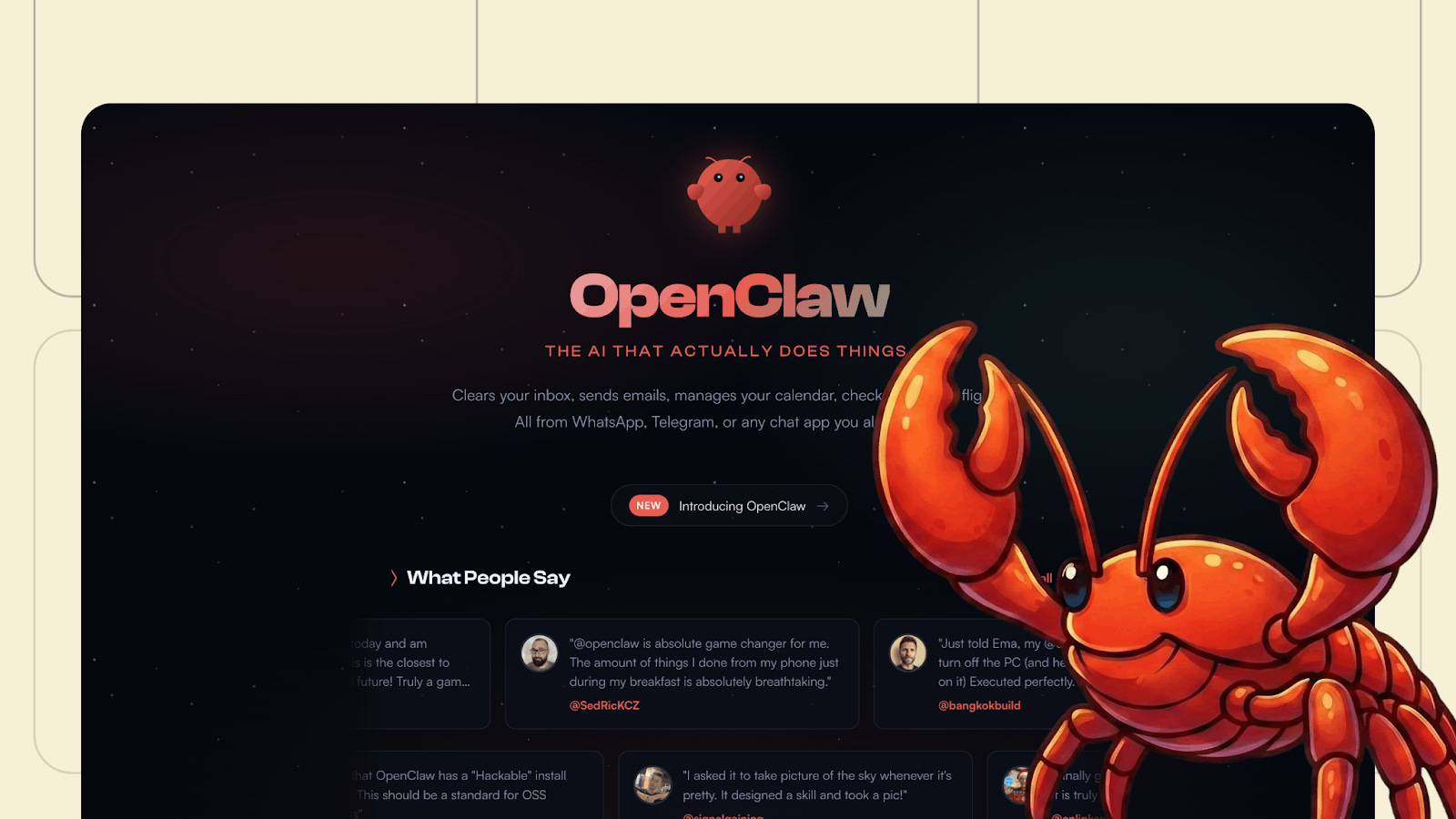
With agent-based systems like OpenClaw (formerly Moltbot / Clawdbot), it is now possible to build a marketing AI agent that does not just assist you, but actively runs large parts of your growth engine on its own. Not by guessing, but by following instructions, loading context, and executing real actions continuously.
This guide explains how to set up a complete marketing AI agent, why running it in the cloud is the preferred approach, which skills actually matter, and which automation ideas deliver real results rather than noise.
1. Installing Your Marketing AI Agent (Why Cloud Beats Local)
What OpenClaw Actually Is
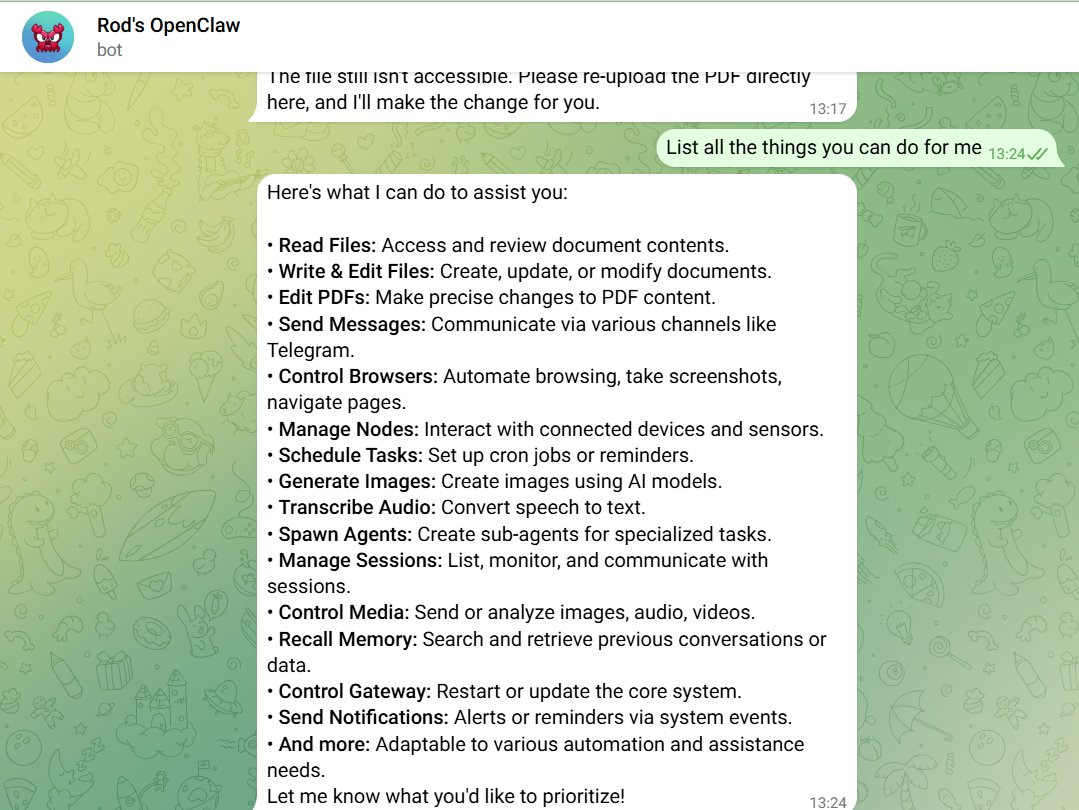
OpenClaw is an open-source AI agent that runs on your own infrastructure. Unlike ChatGPT or Claude in a browser, it is not limited to chat. It can:
Live inside messaging apps like Telegram, Slack, Discord, or WhatsApp
Maintain persistent memory across sessions
Proactively message you instead of waiting for prompts
Execute real actions such as browsing the web, uploading files, sending messages, and calling APIs
Run continuously, 24/7
This makes it suitable for marketing work that never truly stops, such as monitoring mentions, scanning competitors, and distributing content.
Why You Should Use the Cloud Instead of Local
Running OpenClaw locally on a laptop or desktop works for experiments, but it is not ideal for real marketing operations. Local machines sleep, restart, disconnect from networks, and require manual oversight.
Cloud deployment solves these issues.
With modern platforms like Railway or Cloudflare Workers via Moltworker, you get:
Always-on execution
Isolated environments for better security
Predictable costs starting around five dollars per month
No need to manage hardware, power, or uptime
This turns your agent into infrastructure, not a side project.
One-Click Deployment
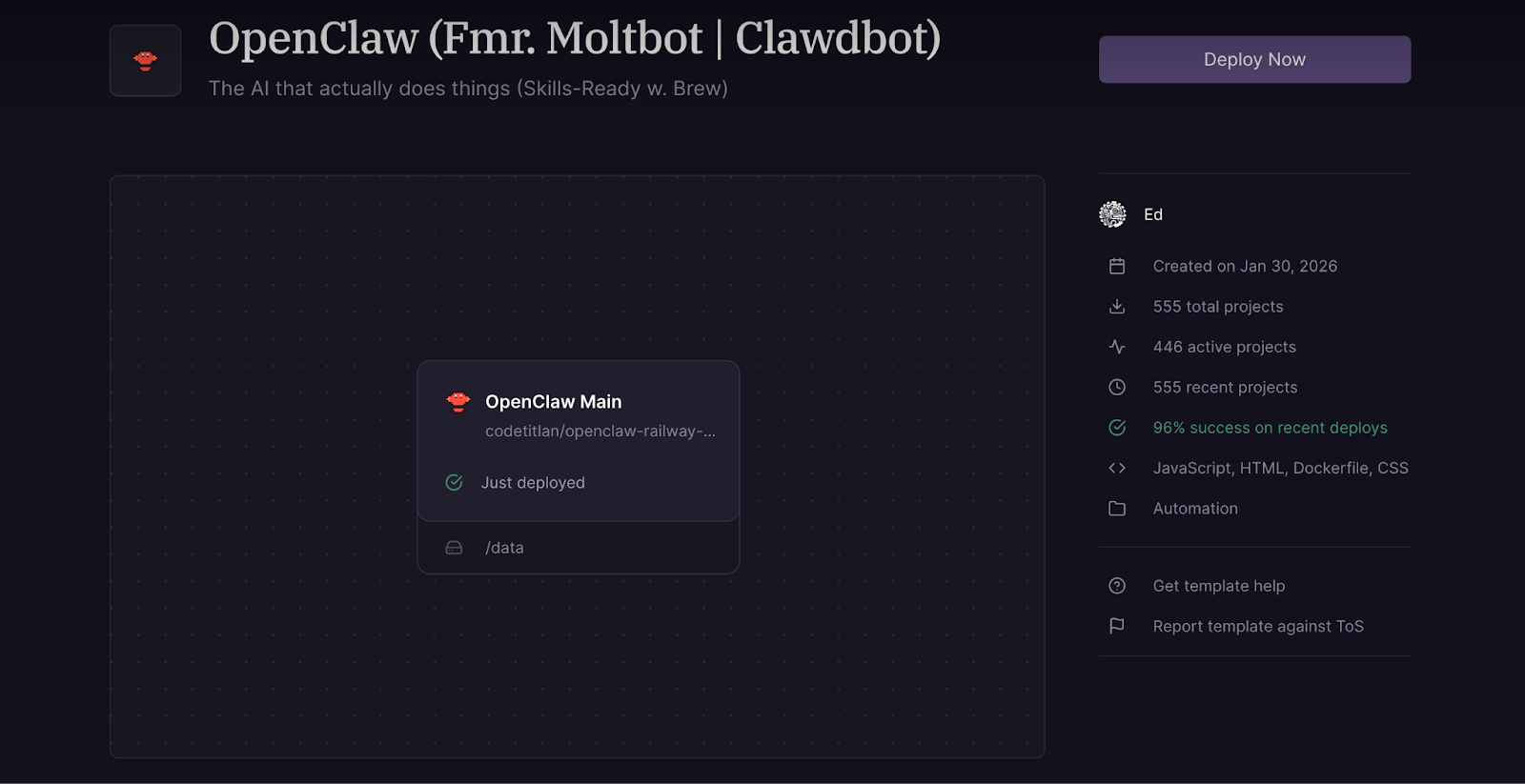
https://railway.com/deploy/openclaw-railway-template
Today, deploying OpenClaw can be as simple as a one-click template. After deployment, onboarding walks you through:
Connecting your preferred messaging app
Adding your model API key (Claude, OpenAI, Gemini, or local models)
Setting basic configuration
Within minutes, your agent is live and reachable through chat.
2. Turning an Installed Agent into a Useful One
Installing OpenClaw is only the first step. What makes it powerful is not the model, but the context you give it.
Understanding the File-Based Brain
OpenClaw does not “learn” in a human sense. Instead, it loads structured context files at the start of each session. Think of it like software configuration rather than training.
Key files include:
Identity definitions describing who the assistant is
User profiles describing who you are and how you work
Tone and boundary definitions
Memory logs that persist across days
Tool notes that describe external systems
This is the skeleton.
Files That Make It Actually Effective
To turn the agent into a marketing operator, you should add domain-specific files such as:
A brand voice document explaining how your company writes and communicates
An email style guide covering tone, formatting, and sign-offs
An executive admin playbook with calendar rules, scheduling logic, and priorities
A contacts file explaining who key people are and how you interact with them
Skill definitions for repeated workflows like research, content repurposing, or outreach
Once these exist, the agent stops asking basic questions and starts making consistent decisions.
The practical result is simple. You explain things once in files instead of repeating them in prompts every day.
3. Adding the Right Skills (Not All Skills Are Equal)
OpenClaw becomes powerful through skills. Skills define what the agent can do beyond text generation.
Core Skills Worth Installing
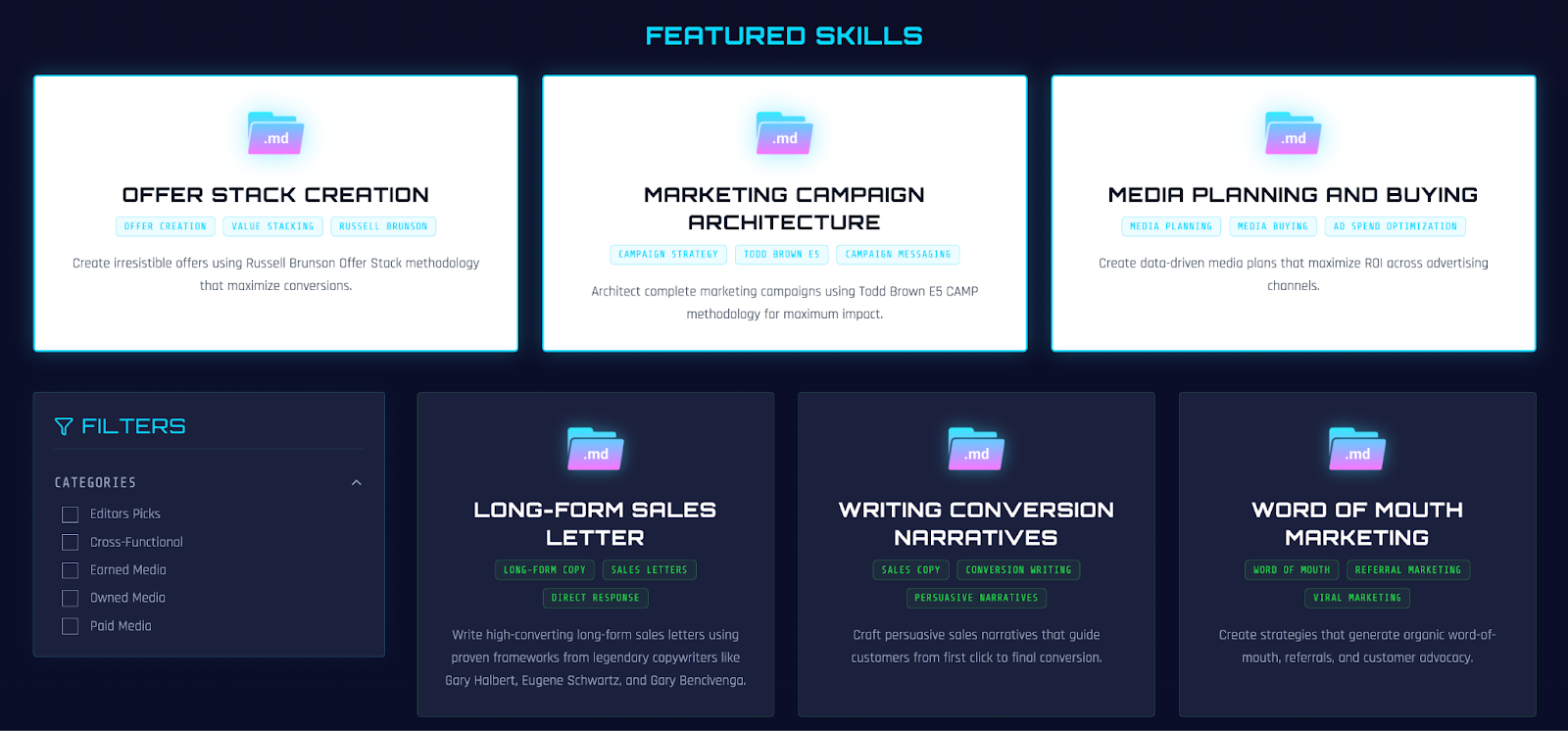
For marketing use cases, the most valuable skills usually include:
Browser automation for navigating websites and submitting forms
File upload and download handling
Email and messaging automation
Web scraping and monitoring
Content transformation and formatting
These enable the agent to interact with real systems rather than just generate ideas.
Skill Discipline Matters
Every skill expands the agent’s reach. That also expands risk.
Best practice is to:
Start with read-only or limited-scope skills
Review the source code of skills before installing
Add permissions gradually as trust increases
Avoid connecting production databases or high-risk accounts early
The agent will do exactly what it is allowed to do. Nothing more, nothing less.
4. Marketing Automation Ideas That Actually Work
Most people associate marketing automation with posting more frequently or scheduling content in bulk. In practice, this often creates noise rather than traction. Agent-based automation is most effective when applied to workflows that require persistence, monitoring, and follow-through over long periods of time. These are the tasks humans are worst at maintaining consistently and where AI agents excel.
Below are marketing automation patterns that work precisely because OpenClaw runs continuously, has memory, browser control, and can act without being re-prompted.
Launching Distributions
Traditional launches concentrate attention into a single moment, such as a Product Hunt day, and then fade quickly. With an AI agent, distribution becomes a long-running process instead of a one-time event.
OpenClaw can be given a list of hundreds of launch directories and submission platforms (Product Hunt, Uneed, Micro Launch, DevHunt, BetaList, Futurepedia, LaunchingNext, NextGen Tools, and 90+ others). Using browser automation through Playwright or Puppeteer, it can submit your product gradually over weeks, adapting descriptions for each platform’s audience and requirements.
The agent tracks approval status, detects when listings go live, and notifies you immediately. Instead of a single traffic spike, you get steady exposure across the entire launch ecosystem, including platforms with long waitlists that would otherwise be forgotten.
Backlink and Outreach Monitoring
OpenClaw can scan your niche for broken links on high-authority websites by crawling pages and checking outbound references. When it finds a broken link relevant to your content, it can identify the site owner, draft a personalized outreach email based on the site’s tone and context, and send the message automatically. If there is no response, it follows up after a defined interval and logs the interaction in your CRM or internal tracker.
Because the agent operates continuously, it does not rely on campaign windows. Link acquisition becomes cumulative rather than burst-based, and outreach quality improves because personalization is generated from actual page context rather than templates.
Competitor Change Detection
Competitive intelligence usually fails because it depends on humans remembering to check. Agents eliminate that failure mode entirely.
OpenClaw can monitor competitor websites, changelogs, pricing pages, job boards, blogs, and social accounts in parallel. When something changes, a new feature, a pricing adjustment, a hiring signal, or a sudden silence in communication, the agent correlates these signals and alerts you within minutes.
For example, a new job posting for machine learning engineers combined with recent infrastructure changes might indicate an upcoming feature launch. These insights arrive while competitors are still preparing announcements, giving you time to respond strategically rather than reactively.
Content Syndication at Scale
Most teams publish content once and hope it spreads organically. Agent-driven syndication treats content as a reusable asset rather than a single-use artifact.
OpenClaw can take a single blog post and transform it into platform-native versions for Medium, Dev.to, Hashnode, LinkedIn articles, Twitter threads, and Reddit posts, each formatted and framed appropriately for its audience. These are not copy-paste duplicates but adapted versions optimized for how each platform works.
Once published, the agent monitors engagement and reports which channels drive meaningful traffic or conversions. Over time, this creates a feedback loop where distribution strategy improves automatically instead of relying on guesswork.
Micro-Influencer Outreach
Influencer outreach usually fails because personalization does not scale. Agents change this by doing the analysis work humans avoid.
Given an ideal customer profile, OpenClaw can scan Twitter and LinkedIn for micro-influencers in the one to fifty thousand follower range, analyze their recent posts, and identify genuine overlap with your product or message. Outreach messages are then generated based on specific content the influencer has published, not generic compliments.
Responses are tracked, follow-ups are scheduled automatically, and positive replies can trigger calendar scheduling or handoff to a human. What previously required a full outreach team becomes a controlled, repeatable process managed by a single agent.
The common theme across these use cases is not speed, but persistence. OpenClaw does not get tired, forget tasks, or lose momentum. When given clear context, defined skills, and sensible permissions, it becomes an always-on marketing operator that compounds effort quietly in the background.
That is where agent-based marketing automation actually delivers value.
5. Security and Responsibility
A marketing AI agent is powerful because it has access. That access must be treated carefully.
Use dedicated accounts. Limit API scopes. Monitor logs. Avoid production systems early. Prefer models with stronger resistance to prompt injection. Treat the agent as a junior operator who works nonstop but still needs guardrails.
When handled responsibly, the risks are manageable. When ignored, they compound quickly.
Final Thoughts
Marketing AI agents are not shortcuts. They are force multipliers.
The real shift is not replacing creativity, but removing the constant operational drag that slows teams down. When context is loaded once, skills are defined clearly, and automation runs continuously, marketing stops being reactive.
Instead of prompting tools, you design systems.
That is the real unlock.